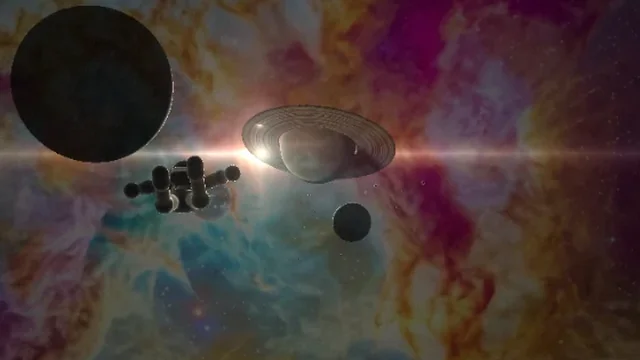
Main scene
From $2,500 USD
One idea. One journey. One goal.
Custom design, full development, mobile optimization, domain and hosting, and the deployment.
Estimated time: 2 to 3 weeks.Web design · Mexico
The best ideas aren't read. They're travelled through.
What an immersive website is, explained in writing: sites designed and coded entirely to measure, where interaction, narrative and movement help someone understand an idea before making a decision.
The definition
A traditional web page is read. An immersive web page is travelled through: as you scroll, the scene changes with you, and the site stops feeling like a catalog and starts feeling like a place.
That's why they are also called interactive websites or 3D web experiences: movement, animation and, when the project calls for it, real-time 3D are how the idea is told, not decoration on top of it.
The difference isn't decorative. On a normal page the visitor decides what they look at and in what order, which is perfect when they've come for a specific fact. On an immersive one, whoever designs it decides the order and the rhythm in which each piece of information appears — and that is exactly what you need when you have to convince before you inform.
The other difference is underneath: these pages aren't assembled by filling in a template. Every scene is drawn and coded from scratch, which is the only way for the movement to make sense and for the page to keep loading fast in spite of it.
The work
Projects built so far. They can be travelled in full, on a phone or on a computer, and each one says where it stands:
Cedros International School
Pending approval by school leadership
The school's crest draws itself as you scroll, and out of it the cedars grow. One idea told through movement.
See the review version →Pacífico Azul
Proposal pending approval
A private aviation operator: the hangar opens with the scroll and the map traces the route as you go.
See the proposal →FACOMT
Approved, launching on its own domain
A public works contractor: a blueprint draws the logo, the camera walks through its door and out onto the job site, layer by layer.
See the site →When a project goes live on the client's domain, its label changes to “Live” and the link goes to the official site. How each one was built: Cedros · Pacífico Azul.
And this studio's own journey —a descent from space to the bottom of the sea— can be travelled here. It's the calling card and, at the same time, the demonstration.
If what you are after is specifically 3D —camera, volume, light—, the kinds that exist and what they cost are on 3D websites.
The comparison
| Traditional page | Immersive page | |
|---|---|---|
| How it's built | Template or CMS, with plugins | Designed and coded from scratch, no templates |
| What the visitor does | Searches and jumps to what interests them | Moves through a journey with an intended order |
| What it's for | Informing, looking things up, publishing often | Convincing, explaining something new, leaving a mark |
| Who edits it | You, from an admin panel | Whoever coded it, through ongoing care |
| What it costs | Less, and it arrives sooner | More, and it takes weeks |
Neither column is better. They're different tools: the right question isn't which one is more modern, but which one solves what your project needs this year.
The fit
When the first impression decides the sale and the product still needs explaining:
If you need to publish three articles a week, if your business is mostly a catalog of hundreds of products that change on their own, or if you're still validating an idea and don't yet know what you're selling. In those cases another tool suits you better —a CMS, an off-the-shelf store, even a well-chosen template— and I'll tell you so in the first conversation, even if it costs me the project.
The craft
No mystery, so you know what you're buying:
Before anything is drawn, we decide what the visitor has to understand and in what order. The journey is written the way a story is written: what's seen first, what's saved for the end, where it's worth pausing.
Every scene is designed to fit the brand —color, typography, illustration, photography— making sure the user experience doesn't get lost inside the effect: you always have to know where you are, how much is left and how to reach the contact.
The page is written by hand: scroll-linked animation, frame-by-frame sequences, 3D in the browser when the project calls for it, and careful frontend work so the movement runs evenly. No stacks of plugins.
It's the part that takes the most work and the part nobody sees. Different images are served for phone and desktop, every file is compressed, it's tested on small screens —portrait and landscape— and it respects anyone who has animations turned off for accessibility.
The text lives in the HTML, not inside the animation: titles and descriptions, structured data and a sitemap ship solved. That's the reason this page exists — the journey convinces, but whoever arrives looking for information needs something written to read.
The studio
Johonatan Cordero, web designer. Cauce is a one-person web design studio: you talk directly to the person who designs it and writes the code, with no account executive and no chain of emails. That has an upside and a limit, and both are honest — nobody is going to half-understand you, and I take on a small number of projects at a time.
I work from Mexico, remotely, in Spanish and in English. Besides websites I do brand identity, illustration and applied graphics, so if your project needs both you don't have to coordinate two vendors.
The investment
It's quoted by scene. A scene is one idea you travel through from beginning to end: the first one pays for building the world —art direction, code, rhythm— and the ones that come after are derived from it, so they cost less.
Main scene
From $2,500 USD
One idea. One journey. One goal.
Custom design, full development, mobile optimization, domain and hosting, and the deployment.
Estimated time: 2 to 3 weeks.Additional scenes
Lower cost per scene
The world is already built.
Derived from the main one, reusing its visual language and its performance. The world isn't built again: it grows.
Each one is priced by its complexity.If the project needs a store, bookings or advanced 3D, that's quoted separately. The full breakdown —what's included, what isn't, what moves the price and how it compares to the market— is on website pricing, in writing →
Questions
It doesn't have to. The weight comes not from the movement but from images and from libraries loaded needlessly. When it's coded to measure, different images are served per device and no unused plugins are dragged along: it usually weighs less than a commercial template with half a dozen extensions active.
Those are techniques; immersive is the purpose that orders them. A loose parallax effect on top of a template doesn't make a page immersive. What makes it immersive is that scene, text and rhythm are built as a single piece.
These sites are written by hand so they load fast, which means they don't come with an admin panel. Changes go through the ongoing care plan. If what you need is to edit every day, another tool suits you better and I'll say so on the first call.
Yes, and that's where it pays off most: one scene, one message, one button. That's exactly the main scene format, and most launches and pre-sales start right there.
Yes. The process is remote from start to finish, with progress shared over video call and WhatsApp. I have clients I've never met in person.
It is a way of designing websites in which the content is not presented as a document to be read, but as a journey that advances with the visitor. As you scroll, the scene changes: movement, imagery and rhythm are used so an idea is understood before a decision is made. It is not decoration — it is a way of ordering information.
A traditional page organizes information in blocks the visitor browses at will; that works very well when they are after a specific fact. An immersive page controls the order and the rhythm in which information appears, so it works when you have to convince before you inform. Neither is better: they are different tools.
When the first impression decides the sale and the product still needs explaining: a product launch, a real-estate pre-sale, a collection catalog, a hotel or restaurant tour, an investor pitch, conferences and events, or the story of a brand that wants to be told in full.
Yes, and that is where most of the work goes. Every scene is tested on a small screen, portrait and landscape, with lighter images and shorter animations where needed. An immersive site that only looks good on a desktop is an unfinished site.
Yes, as long as the text genuinely lives in the HTML and is not drawn inside an animation. It ships with titles and descriptions, structured data, a sitemap and text search engines can read. Even so, for informational searches a written page like this one is what does the work: the journey convinces, the text gets found.
At Cauce the work is quoted by scene. The main scene starts at $2,500 USD, with domain and hosting included for the first year, and additional scenes cost less, because they are derived from the main one and reuse the world already built: each is priced by its complexity. The full breakdown, with what is and isn't included, is on the pricing page.
Contact
If you already know what you need, write to me and we'll pin it down. If you don't yet, that's fine too: the first conversation is exactly for that, and it's free.
or by email johonatan@encauzar.com